Skip to content

Introduction: The Indispensable Impact of Technical Support in Life Sciences
Picture this: You’re knee-deep in a critical experiment, pipette in hand, when suddenly, your top-of-the-line flow cytometer starts flashing error codes like it’s trying to send a distress signal. Panic sets in. Who do you call? Not a colleague from the next bench – it’s time to contact your Technical Support Scientist!
Ciao a tutti! Giuseppe here, your friendly biologist turned industry insider. Today, we’re diving into the world of Technical Support Scientist (TSS)—a career path that’s as essential to modern research as caffeine is to a PhD student.
Now, you might be thinking, “Tech Support? In science? Isn’t that just turning things off and on again?” Yes, in most of the cases, but not always. As a Field Application Specialist (FAS) who works closely with these unsung heroes, I can tell you that Technical Support is the glue that holds our high-tech research world together.

Unpacking Tech Support Scientist role in Biology: Everything You Need to Know
In this post, we’ll explore what it really means to be a Technical Support Scientist, from the skills you need, to the career prospects that await you. We’ll dive into the nitty-gritty of salaries, work settings, and even how AI is shaking things up in this field.
Whether you’re a bright-eyed biology student wondering about career options, or a seasoned researcher considering a pivot, stick around. By the end of this post, you’ll have a clear picture of what it takes to be the unsung tech hero every lab dreams of having on speed dial.
So, let’s dive into this fascinating world!
The Rising Star: Why Tech Support is Crucial in Life Science
First things first: Why is Technical Support Scientist role important in the life science industry? Before we dive into what tech support is, let me hit you with some stats that really highlight its importance.
In the fast-paced world of life sciences, tech support isn’t just a nice-to-have—it’s an absolute necessity. And businesses know this well.
Did you know that companies focusing on customer experience can boost their revenue by up to 80% (zendesk.de). Yup, that’s right. Fixing that quirky spectrophotometer issue could be the difference between a customer for life and, well, watching them run off to your competitor.
Customer retention is critical, as evidenced by data suggesting that roughly 73% of consumers will switch to a competitor after repeated negative experiences (nextiva.com). In a field as specialized as life science, unresolved technical problems can quickly lead to lost business. This is where the Technical Support Scientist jumps in to save the day!

Here’s the kicker: 80% of companies plan to increase their investment in customer experience (nextiva.com). Why? Because they know that satisfied customers are loyal customers! And with this growing emphasis on customer satisfaction, the demand for skilled technical support specialists is skyrocketing!

Alright, we now know Technical Support is crucial for the life sciences industry, but what exactly is it? Let’s dive in!
What is a Technical Support Scientist? Decoding the Unsung Heroes of Life Sciences
Tech Support Scientist is the go-to experts when it comes to the technical aspects of research products. When a centrifuge decides it wants to be a blender, or software starts acting like it’s possessed by a poltergeist, these specialists are the first call. And while the classic “Have you tried turning it off and on again?” often works (true story!), their job goes way beyond that.

Their job is to get you back on track, fast, ready to save your experiments (and your sanity) at a moment’s notice. They help you troubleshoot, fix the issue, and get your experiments moving again—making sure that groundbreaking discoveries don’t get delayed by something as mundane as a firmware update.
Without them, many labs would be left staring at error codes and scratching heads instead of pushing science forward.
Given their critical role, you might wonder: in what specific sectors of the life sciences do these Technical Support Scientists typically operate?
Where Can You Find These Lab Lifesavers? Everywhere There’s Tech to Support!
Technical Support Scientist can be found in almost every corner of the life science industry. Wherever there are products being sold to customers—be it equipment, software, or specialized technology—there’s a need for these experts to keep things running smoothly. If customers buy it, use it, and occasionally curse at it, tech support is there to save the day.
Some common places where you’ll find these tech support superheroes include:
- Biotech Companies: From flow cytometers to fancy imaging systems, if it’s high-tech and essential to research, you can bet a Tech Support Scientist is on call to fix it when it inevitably decides to misbehave.
- Pharmaceutical Companies: Drug development is all about precision, and when essential devices start acting up, Technical Support steps in.
- Lab Equipment Providers: When companies sell advanced lab tools, they don’t just hand over the box and say “good luck!” The inevitable “it worked fine yesterday!”? That’s where Technical Support Scientists come in.
In short, if there’s a product in the life sciences that a customer relies on, there’s a customer tech support specialist not far behind, ready to step in when things go awry.
So, we’ve covered where you’ll find them, but what about how they work?
Work Settings: From Lab Coats to Pajamas
One of the coolest things about Technical Support? The variety of work settings. Usually these specialists support customers providing remote support via phone, email, or chat. Depending on the company and role, you might find yourself:
- Office-based: Even though you’re providing remote support, many companies prefer you to show up in person. At least you can raid the office snack stash!
- Hybrid Roles: Some days you’re in the office, sharing knowing glances with colleagues over particularly bizarre tech queries. Other days, you’re at home, explaining complex protocols while your cat tries to “help” by walking across your keyboard.
- Fully remote: Yes, you can solve complex biological equipment issues in your pajamas!
This flexibility can be a major plus for those transitioning careers. (If you’re a PhD considering if to stay in Academia or switching to industry, you’ll find more insights in my previous post: What to Do After PhD: Academia vs Industry Career Path in 2025)
Whether in the lab or from their living room, the impact of a Technical Support Scientist is defined by their core duties. Let’s delve into the fascinating responsibilities that fill their days.
Responsabilities: The Many Hats of a Technical Support Scientist
Front-Line Support: Essential Tech Tasks
So, what does a Technical Support Scientist actually do? Short answer: a lot. From calming panicked researchers to decoding cryptic error messages, your day is anything but dull. Let’s dive into the colorful world of your responsibilities:
- Remote troubleshooting of hardware and software issues: When a machine malfunctions or software glitches, tech support is just a phone call or email away. They remotely diagnose the issue, guiding scientists through solutions or initiating more advanced repairs. They support not only external customers but also internal team members like FASs, making them crucial for both client satisfaction and smooth internal operations.

- Customer Experience Enhancement: Forget what they say—first impressions matter, but so do the second, third, and tenth. As technical support, you’re the face (or should I say, the voice) of the company after the sale, making sure the customer feels supported, not abandoned.
- Providing expert advice and training: Technical Support Scientists offer virtual or on-site training, helping customers get the most out of their tools and prevent future errors.
Behind the Scenes: Strategic Tech Support Duties
But wait, there’s more! Beyond these core duties, Technical Support Scientists often find themselves tackling a range of additional responsibilities that might surprise you:
- Data Collection and Feedback Management: Every issue you resolve provides insights into how the product works (or doesn’t) in the real world. That feedback is gold for improving future products and services.
- Continuous Learning and Adaptation: The life sciences industry moves at warp speed, so staying up-to-date is essential. From new technologies to updated protocols, you’ll constantly be adding tools to your tech support toolkit.
- Coordinating repairs and service: When troubleshooting fails, the Tech Support team is involved in coordinating, with engineers and manufacturers, to arrange repairs or replace faulty equipment, ensuring downtime is kept to a minimum.

To truly grasp the impact of a Technical Support Scientist, sometimes a firsthand account speaks volumes. So, before we go on, allow me to share a personal story drawn from my experience as a Field Application Specialist.
Personal Insight: FAS and Technical Support Scientist—A Dynamic Duo
As a Field Application Specialist, I’ve had my fair share of interactions with Technical Support, and let me tell you, we’re like two peas in a pod. Or maybe more like cheese and wine—complementary, but distinct.
Here’s the deal: As an FAS, I focus on providing application support for a specific product. I’m the one visiting customers onsite and showing them how to use our products to achieve their research goals. But when technical problems arise, that’s where the Technical Support Scientist steps in.

Despite our different roles, FAS and Technical Support are like two sides of the same coin. I handle the application side, and they focus on the technical stuff, but we’re both aiming for the same goal: delivering the best customer experience possible. When we work together, it’s like a well-oiled machine—each of us solving different pieces of the puzzle.
👉 Stay tuned—soon I’ll share a full post about the FAS role!
Real-Life Example: The Tech Support Lifeline
Tech support has saved my skin more times than I can count. Being in the field means I often travel to customer sites, ready to deliver training or offer application support. But every now and then, things take a turn for the worst—cue ominous music—usually right in front of the customer.
Picture this: I’m there, cool as a cucumber, setting up for a demo. I’m the expert. The science guru. Everything’s going great… until, out of nowhere, the instrument decides to throw up error messages like it’s auditioning for a role in The Exorcist. My internal panic mode? Activated. Externally? I’m smiling, nodding, telling the customer, “Oh, this? Totally normal. Happens all the time!” (It doesn’t. It definitely doesn’t.)
This is when Tech Support becomes my superhero squad. They swoop in, like the Avengers with IT skills, armed with supernatural knowledge of every error code known to man. I’m suddenly following their instructions, nodding wisely, making small talk with the customer, pretending I’m not one misstep away from a meltdown.

Knowing a Technical Support Scientist is just a call away is a game changer. What could’ve been a disastrous fail ends up as just another day in the life of an FAS—minus the heart attack, of course.
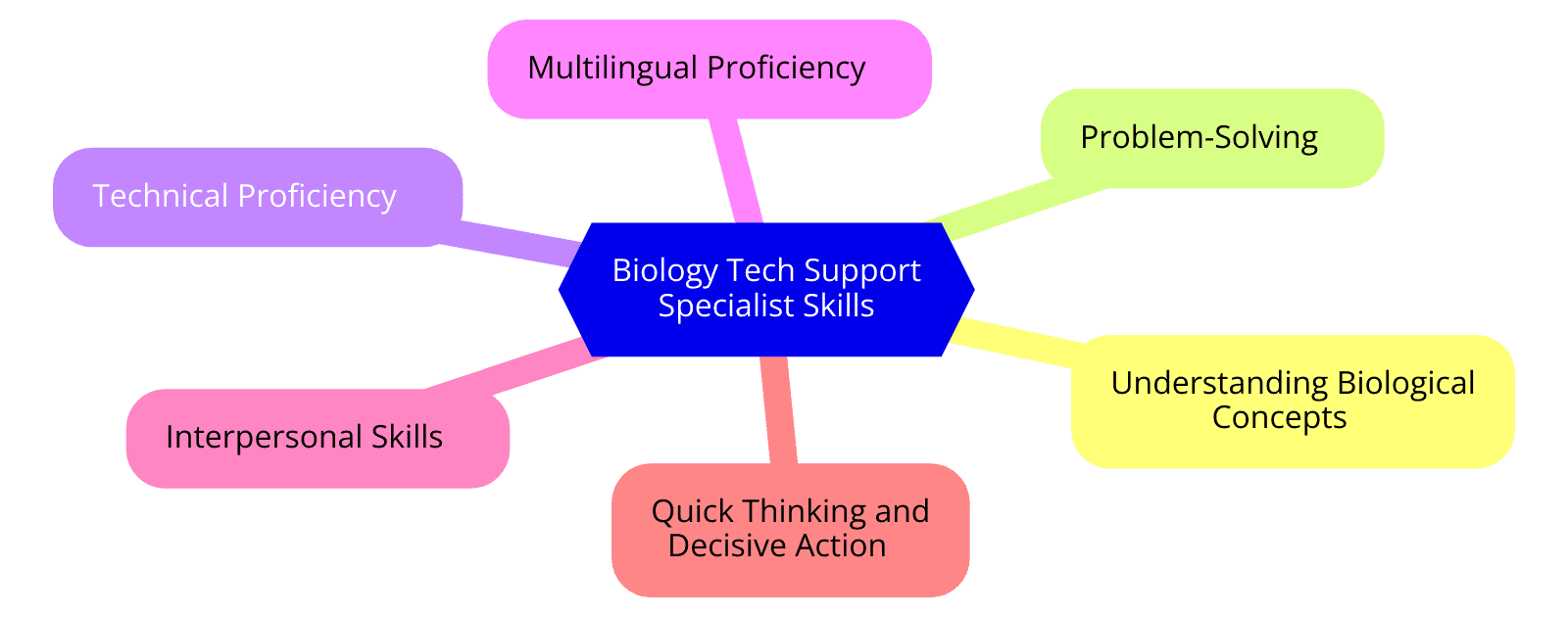
Skills and Qualifications: What It Takes to Be a Biology Tech Support Superhero
Now that we’ve covered the what and where of Technical Support Scientist role, let’s dive into the how. What superpowers do you need to excel in this role and save the day for labs around the world?
1.Strong understanding of scientific concepts
To excel as a Technical Support Scientist, you need to speak the language of science—fluently. In fields like biology, this means being comfortable with CRISPR, protein purification, and cell culture techniques. Customers rely on your expertise, so a solid understanding of these concepts isn’t optional—it’s essential.
2.Problem-Solving and Analytical Thinking

You’re the Sherlock Holmes of the lab tech world. When equipment and software start behaving like rebellious teenagers, your detective skills come into play. You dig deep, hunt for clues, and solve the mystery. No problem is too cryptic when you’re on the case.
3.Technical and computer Proficiency
Modern labs are tech wonderlands, and you’re the one who knows how everything works. From remote access software to firmware updates and even the occasional “is the USB plugged in?” moment (yes, it happens more than you think), your technical know-how is top-tier.
4.Proficiency in multiple languages
The life sciences are a global community, and so are their Tech Support needs. Knowing multiple languages means you can provide support far and wide. Picture yourself effortlessly resolving an issue for a lab in Europe, then seamlessly helping another in Asia. Being able to troubleshoot in more than one language? That’s next-level technical support superpower status.
5.Quick Thinking and Decisive Action
In technical support, speed matters. You need to be able to think on your feet and provide effective solutions rapidly.
A study found that 27% of Americans cite “lack of effectiveness” as their top customer service frustration, while 12% point to “lack of speed” (zendesk.de). This is where Technical Support Specialist’s technical know-how and rapid response time become invaluable, as they can handle complex problems much more effectively than other representatives.

6.Interpersonal Skills: Because Machines Aren’t the Only Things That Need Handling
In customer tech support, handling people is just as important as handling machines. Here’s what you’ll need in your toolkit:
- Communication: It’s all about making the complex simple. You’ll need to master the art of explaining intricate technical details clearly, preventing that dreaded glazed-over look from your customers.
- Patience: Remember, not everyone is as tech-savvy as you. You might need to explain the same concept multiple times, each time with a smile (even if they can’t see it over the phone).
- Empathy: Your customers are often stressed, frustrated, and on a deadline. Being able to understand and relate to their situation is key.
The Silent Heroes: Impact on Customer Satisfaction
And let me tell you, these interpersonal skills aren’t just nice-to-haves—they’re essential for making a real impact on customer satisfaction. It’s not just about solving problems; it’s about creating happy customers who keep coming back.
Did you know that a great customer service experience can make people over five times more likely to recommend a brand? And around 91% of customers say they’re more inclined to buy again after receiving excellent support (nextiva.com). That’s the kind of impact solid technical support can have.

It’s not just me who appreciates their help as FAS—customers often tell me how grateful they are for the quick and efficient support they received. And that speaks volumes about the importance of Tech Support in our customer experience.
In fact, poor support has consequences. Roughly 70% of customers have walked away from a company after a bad service experience (nextiva.com). In the life science industry, where customers rely on complex instruments and time-sensitive experiments, the stakes are even higher. A weak tech support system doesn’t just risk frustration—it risks losing valuable clients.
Bad customer service experiences cost businesses $4.7 trillion annually in lost global consumer spending (zendesk.de). That’s trillion with a T! Tech support plays a crucial role in preventing these costly scenarios by addressing technical issues quickly and effectively.

Convinced of their superhero status yet? Great! Now, let’s tackle the next big question for aspiring Technical Support Scientists: what’s the academic journey like, and do you actually need a PhD to tell someone to “have you tried to reboot”?
Education: Do You Need a PhD to Turn Things Off and On Again?
Short answer: Nope! Long answer: It depends.
Most Technical Support Specialist roles require at least a Bachelor’s degree in biology, biotechnology, or a related field. Some positions, especially those dealing with more complex systems or specialized equipment, might prefer a Master’s degree.
A PhD isn’t typically required, but it can certainly give you an edge, especially when dealing with advanced research equipment or complex bioinformatics tools. Having one means you’ll have spent enough time in a lab to personally witness every way an instrument can break down (sometimes in spectacular fashion). You’ll be a seasoned expert in fixing things—or at least Googling obscure error codes at lightning speed.
That said, generally, experience and technical skills often trump advanced degrees in this field.
If you hold a PhD in biology and are exploring diverse career avenues beyond academia, my previous post, “What Can You Do with a PhD in Biology? Discover Exciting Career Paths,” offers a comprehensive look at various roles you can pursue.
So, if advanced degrees aren’t always the top priority, what kind of experience is actually needed to land a job as a Technical Support Scientist?
Experience: Do You Need to Have Fixed a Supercomputer with Duct Tape?
While previous Technical Support experience is certainly a bonus, it’s not a dealbreaker. Many companies are more interested in finding the right candidate with the right mindset—and they’re often willing to train you. This position is considered a prime entry-level job, making it a great way to kick open the door to the biotech world, even if your current tech fix-it skills don’t go beyond rebooting your Wi-Fi router.
That said, any relevant experience can be a plus. This could include:
- Internships in biotech companies
- Lab experience where you were the go-to person for tech issues
- Customer service roles (because dealing with angry customers is a transferable skill, trust me)

My own stint as a waiter, for instance, proved surprisingly useful for my Field Application Specialist gig. Handling hangry customers is eerily similar to dealing with frustrated scientists – any customer-facing experience, even if it’s explaining menu items instead of molecular biology, can be your golden ticket.
Remember, companies are often looking for people who understand both the technical and scientific/biological aspects of their products. Your lab experience, combined with your tech skills, can make you a strong candidate even without specific technical support experience.
Sharpening Your Skills: Become a Knowledge Sponge
Even without direct Technical Support roles on your resume, you can actively build the necessary expertise. In every lab or institute, there’s always that person—the one who can fix a broken centrifuge with a paperclip and some duct tape. Find these people and make the most of these connections to sharpen your troubleshooting skills. Learn how they approach and resolve technical issues—it’s a great way to build compelling stories for your interviews.
Even if you don’t have access to tech experts at work, tap into your tech-savvy friends. There’s always something to learn from those who excel in this area. “Tell me about a time you solved a technical problem” becomes a lot easier when you have real-life examples, instead of recounting that time you accidentally unplugged your printer. Trust me, these experiences are pure gold!

From my experience as a Field Application Specialist, working closely with Technical Support Scientists has been a game-changer. Over time, collaborating with them has even boosted my own understanding of the technical side, making me better equipped to troubleshoot minor issues myself before I need to call in the cavalry.
These interactions can be a goldmine of information about what the job entails and what skills are most valuable, plus they give you real-world examples to discuss in interviews.
Alright, now that we’ve covered what it takes to get in, let’s talk about the stuff that makes the world go round: career growth and cold, hard cash.
Career Growth: More Than Just Bigger Headphones
Starting as Technical Support Scientist can open doors to various career paths. Technical Support skills are highy transferable. You’re not just learning about technology; you’re learning about people, processes, and the intricate dance of modern scientific research.
Here’s where your career might take you:
- Climb the Tech Support Ladder: From solving simple password issues to managing entire support teams. Advance to a senior Technical Support role and manage Tech Support groups.
- Move to Product Development: Your front-line experience makes you the perfect candidate to help design the next wave of lab tech. Who better to build it than someone who knows what’s wrong with the current versions?
- Transition to a Field Application Specialist role: Follow in my footsteps, traveling far and wide to teach scientists how to use instruments. It’s like being a rock star, except your fans are scientists and they’re cheering for protocols, not autographs.
- Even move into sales or marketing roles: Who better to sell or market scientific equipment than someone who knows it inside out?
- Shift into Project Management: Juggle resources, timelines, and teams like a circus pro—your tech support skills have prepared you well for this thrilling balancing act!
For those intrigued by the world of project management in biology, be sure to check my our deep dive: “Thriving as a Biology Project Manager: An Exciting Career Overview (2025).“
So, the career trajectory is exciting. But what about the compensation?
Salary Ranges: From Instant Ramen to Risotto
Ok, let’s get to the numbers. Keep in mind that salaries can vary widely based on location, experience, and specific industry. But here’s a rough guide to get your money-loving neurons firing:
- North America: $45,000 – $80,000 USD
- UK: £25,000 – £50,000 GBP
- Germany: €35,000 – €65,000 EUR
- Italy: €25,000 – €50,000 EUR
- France: €30,000 – €60,000 EUR

Remember, these are just averages. With experience and specialization, you could earn significantly more. Plus, many companies offer bonuses, profit-sharing, or other perks that can boost your total compensation.
A Reality Check: The Entry-Level Equation
Let’s keep it real for a moment – like a freshman scientist’s first Western blot, your initial salary in tech support might not look all that impressive. Entry-level roles in tech support often pay less than positions in research, scientific sales, or management within the life sciences world.
And honestly, it’s a bit unfair, right? Working behind the scenes, they don’t always get the credit they deserve. While I’m doing my fancy presentations, they’re the ones who swoop in to save the day when an instrument decides to act like it’s starring in a dramatic soap opera. Their quick problem-solving often makes me look good in front of customers, even though they’re the real heroes preventing meeting derailment.

But don’t let that put you off! Think of it as your training ground—biotech’s version of boot camp. As you gain experience and move into more senior roles, your paycheck tends to grow with you. And here’s the sweet part: working in technical support can be your golden ticket into the wider life science industry. It’s a great way to break in, make connections, and get an insider’s view of how everything really works behind the scenes.
So, while the financial start might require a bit of patience, the value and opportunities are undeniable. But what’s the full picture? Let’s dive into the overall pros and cons of life as a Technical Support Specialist.
Pros and Cons: The Good, the Bad, and the Beeping Equipment
Like any job, being a Technical Support Specialist has its ups and downs. Let’s break it down:
Pros:
- Problem-Solving Satisfaction: Remember that rush you got when you finally nailed a difficult experiment? That’s your daily dose in Tech Support. There’s also a unique thrill in being the hero of someone’s day.
- Entry level job: In a field where even entry-level positions often demand years of experience, Technical Support is like finding water in the Sahara. It’s a golden ticket into the industry for fresh graduates.
- Variety: Monotony? Never heard of her. Every day in Tech Support brings a fresh challenge, a new puzzle to solve, and possibly a new “fun” equipment malfunction. You’ll never know what’s going to break next!
- Intersection of Biology and Technology: You get to work at the cutting edge of both biology and futuristic technology. It’s like living in a sci-fi movie, except instead of alien life forms, you’re helping scientists figure out why their PCR machine sounds like a jet engine.
Cons:
- Dealing with Frustrated Customers: Not everyone is at their best when their equipment isn’t working. You’ll encounter more personality types than in a psychology textbook. Some days, you’re dealing with frustrated scientists who make Gordon Ramsay look like a teddy bear.
- On-Call Hours: Biology doesn’t clock out at 5 PM, and neither might you. Depending on the role, there might be times you’re needed outside regular hours—possibly even weekends. Because science waits for no one (except maybe for coffee).
- Keeping Up with Rapid Changes: Technology evolves faster than you can say “firmware update.” Staying on top of the latest advances can feel like you’re constantly sprinting on a treadmill. Just when you think you’ve got it down, bam—new system, new headaches.
- High-Stress Situations: When someone’s entire experiment is on the line (and the grant money behind it), the pressure can be intense. Sometimes you’re the only thing standing between a scientist and a very bad day—and possibly a very angry email.

Personal Insight: Embracing the Ebb and Flow of Stress
Speaking from my experience as a Field Application Specialist, the stress in customer support is very real—especially during product launches, software upgrades, or feature rollouts. Customer requests skyrocket. While I’m busy tackling application issues, Tech Support often gets hit with a tsunami of technical problems.

It’s a bit like working in a chaotic Italian restaurant on a Saturday night—except instead of people yelling for spaghetti, you’ve got scientists frantically wondering why their $500,000 instrument is flashing angry error codes like it’s auditioning for a sci-fi meltdown scene. I’ve seen Technical Support Scientists get buried in tickets, and yes, I’ve felt a twinge of guilt when I pass the “hot potato” their way while they’re already juggling flaming torches.
But it swings both ways. Sometimes it’s the application side that’s burning. We trade stress depending on the season—it’s a team effort, and we’ve got each other’s backs.
Fortunately, the landscape of Technical Support is evolving, with new technologies promising to alleviate some of these very pressures. In fact, did you know that Artificial Intelligence is already profoundly transforming how biology tech support operates?
The Impact of AI on Biology Tech Support: The Rise of the Machines (But Not in a Scary Way)
Alright, let’s dive into the buzzword of the century—AI! Artificial Intelligence is transforming everything: it tells us what to cook with one potato, a crust of bread, and the remote control we accidentally left in the fridge—and yes, it’s reshaping Technical Support too.
In fact, two-thirds of business leaders say that investing in AI for customer service has led to significant performance improvements (nextiva.com). It’s not just about efficiency—it’s about enhancing the entire customer experience. And customers are on board too: 52% of consumers are interested in AI that helps guide them through a product, website, or feature experience (nextiva.com).

So, whether it’s troubleshooting or onboarding, AI is fast becoming a game-changer in the world of Technical Support. But don’t worry, we’re not heading for a Terminator-style takeover just yet.
Current AI Applications in Tech Support
AI is already changing the game in Technical Support, making it smarter, faster, and, well, a little less stressful for us humans. Let’s take a look at how:
- Chatbots and Virtual Assistants: These AI-powered tools can handle simple queries, freeing up the Technical Support Scientist for more complex issues. Fun fact: 75% of consumers believe chatbots provide the correct information, and nearly 8 in 10 consumers say AI bots are helpful for simple issues (nextiva.com).
- Predictive Analytics: AI can analyze patterns in support tickets to predict common issues and suggest solutions. This helps TSSs resolve problems faster than a PhD student rushing to happy hour.
- Automated Ticket Routing: AI can categorize and route support tickets to the most appropriate team or individual, speeding up response times.
- Knowledge Base Management: Ever tried to find that one piece of info buried in a sea of outdated files? AI can help maintain and update knowledge bases, ensuring that information is always current and easily accessible.
And if you’re intrigued by AI’s bigger role in biological research itself, beyond just support, don’t miss our take on Google’s AI Co-Scientist: “Google’s AI Co-Scientist: A Revolutionary Breakthrough or Just More Hype?“
Future Trends: What’s on the Horizon?
And just when you thought AI couldn’t get any cooler, here’s what the future has in store:
- More Advanced Diagnostic Tools: Soon, AI could help diagnose equipment issues more accurately and quickly, faster than you can say “Have you tried turning it off and on again?”
- Personalized Support: AI could tailor support based on a customer’s history and preferences. It’s like having a tech support therapist who remembers all your past tech traumas… I mean, technical issues.

- Proactive Support: AI might predict potential issues before they occur, allowing for preventative action. It’s like in “Minority Report”, or should I say “Minority Tech Support” (apologies for this joke!).
- Enhanced Training: AI could offer personalized training for Tech Support staff and customers, making sure we all keep up with the ever-evolving tech jungle.
Skills to Stay Relevant in an AI-Driven World
Now, before you worry about AI stealing all the tech support jobs, here’s the good news: there’s still plenty of room for us humans, as long as we focus on the right skills:
- Complex Problem-Solving: AI can handle the routine stuff, but when it comes to that weird, one-off glitch nobody can explain, humans will still be in high demand. So, embrace your inner Sherlock Holmes.
- Emotional Intelligence: No matter how smart AI gets, people still prefer the human touch when it comes to personal connections. It’s you who has the unique ability to engage with customers, soothing their frustrations and preventing any hardware from flying out the window. AI can’t offer a tissue… at least, not yet.
- AI Literacy: You don’t need to become a full-on AI programmer, but knowing how to work with these systems will definitely give you an edge.
- Continuous Learning: Stay curious, stay sharp. Biology is evolving, AI is evolving, and you’ll want to keep pace with both. Plus, you’ll always have cool new stuff to talk about at dinner parties.

Wrapping Up: Your Next Step in the World of Biology Tech Support
And there you have it, folks! We’ve journeyed through the world of Technical Support Scientist, from the day-to-day responsibilities to the skills you need, the career prospects, and even the impact of AI.
Remember, Technical Support is more than just fixing equipment or troubleshooting software. It’s about being the bridge between cutting-edge technology and groundbreaking science. It’s about enabling researchers to focus on their work by ensuring their tools work seamlessly. And sometimes, it’s about being the hero who saves the day when things go wrong.
Whether you’re a fresh graduate looking to break into the life science industry, or a seasoned researcher considering a career change, Technical Support Scientist role offers a unique blend of science, technology, and problem-solving that can be incredibly rewarding.

So, what do you think? Are you ready to trade your lab coat for a headset? The world of Technical Support is waiting for you, full of challenges, opportunities, and the occasional beeping equipment.
Now it’s your turn: Join the Biology Support Brainstorm
We’ve explored the dynamic world of the Technical Support Scientist in biology, from troubleshooting woes to career triumphs. Now, we want to hear from you!
- 💬 Drop a comment – Are you a TSS, or considering this exciting path? What’s been your biggest challenge or most rewarding “fix”? Let’s share insights!
- 📩 Subscribe to the Newsletter – Get the latest career tips, industry insights, and honest discussions about navigating the scientist’s journey, delivered straight to your inbox.
- 🚀 Follow Curiosity Bloom – Don’t miss our upcoming deep dives into careers, the fascinating world of biology, and beyond.
- 🔄 Share this post (See “If you like to share” below) – Know a fellow biologist who’d thrive as a Technical Support Specialist? Send this article their way! Great troubleshooters know the power of a strong network.
This is Giuseppe, signing off. May your troubleshooting be swift, your customers be grateful, and your coffee be strong. Ciao, and happy supporting!
FAQ: Got Questions? We’ve Got Answers!
Do I need an IT background to work in technical support for biology?
Having some IT skills definitely helps, but it’s usually your biology expertise that matters most. Employers often provide training for the technical tools—you just need to bring the scientific know-how and willingness to learn.
What’s the most challenging part of the job?
Balancing the technical aspects with customer service can be tricky. You need to be able to solve complex problems while also managing customer expectations and emotions.
Is Technical Support Scientist a good stepping stone for other careers in biotech?
Absolutely! The knowledge and skills you gain in Technical Support can be valuable for roles in product development, sales, marketing, and even research.
How should I handle frustrated or upset customers?
Stay calm, stay kind, and don’t take it personally. Customers are usually upset with the problem, not with you. Show empathy, listen carefully, and guide them toward a solution with clear, respectful communication.