Skip to content

Introduction: Why Biology Students Need Science Career Advice Early (Before It’s Too Late)
Ciao a tutti! Giuseppe here! Today I want to share some science career advice I really wish I’d followed back when I was a student.
If you’re a biologist, chances are you got into this field for one simple reason: you fell in love with the science (Because let’s be honest—if you chose biology purely for the money or job security, your risk assessment skills might need a little work…). I know I did. I followed that passion from my biology degree straight into a PhD, driven by curiosity and genuine excitement for discovery.
But here’s a question I didn’t ask myself until my PhD was nearly finished: “Where is this path actually taking me?”
Passion is the fuel that gets you started—but it doesn’t come with a map. I postponed career planning until the moment I had to plan my next move, which left me stressed, overwhelmed, and scrambling for options.
This is the story of the mistakes I made, the lessons I learned the hard way, and why I believe that solid biology career advice early on isn’t just a good idea—it’s essential if you want to build a professional life you love
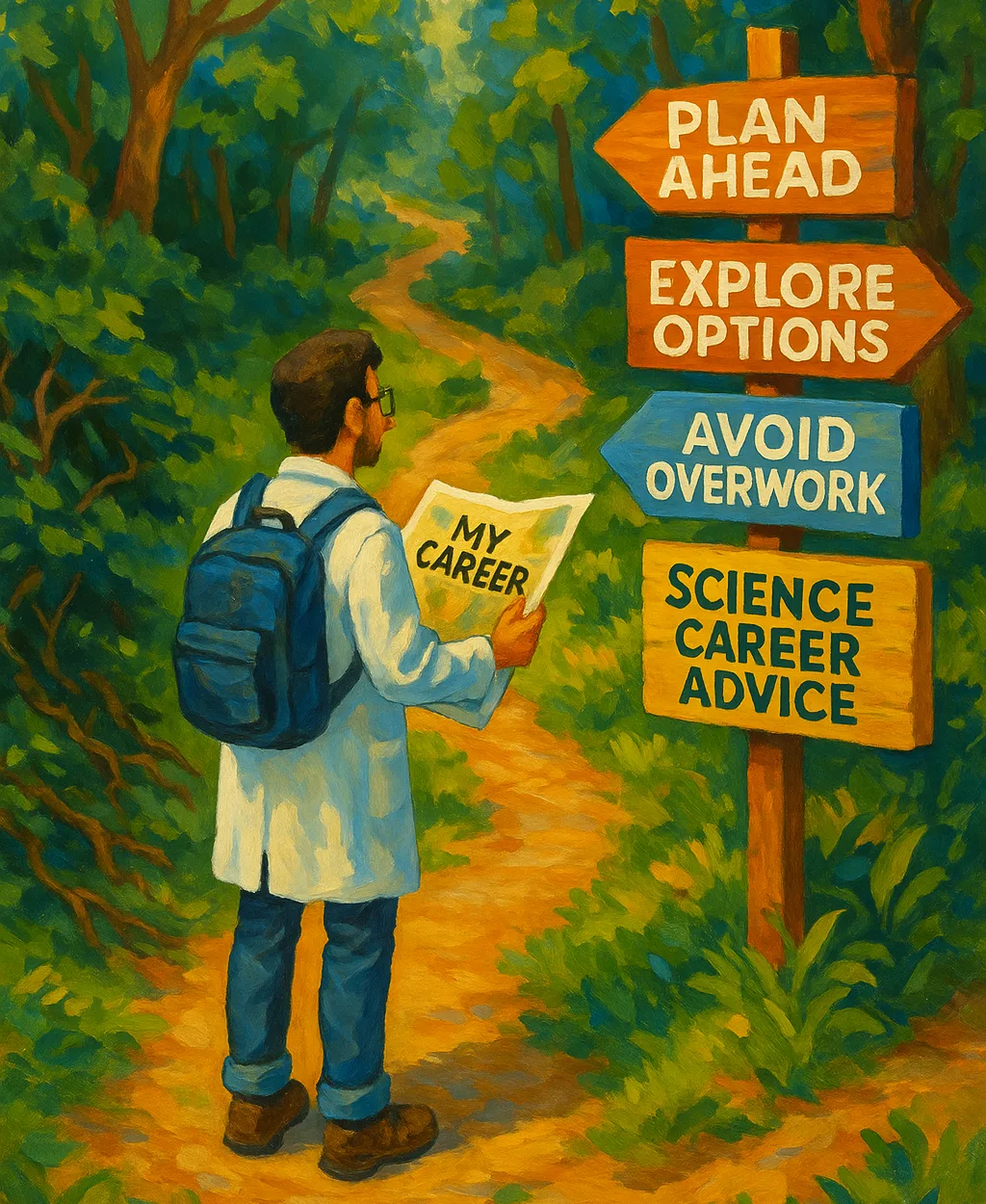
So if you’re a biology student, PhD candidate, or postdoc feeling a bit lost about your next steps, these biology career tips are for you.
My Biology Career Mistakes: What I Wish Someone Had Told Me
Let me first give you a bit of background. I’ve never been the kind of person who plans his future in detail. I love to be spontaneous and keep my options open rather than locking myself into one rigid path. So, throughout my entire education, I never really asked myself what I might actually do for a living afterwards.
For some of you, this probably sounds very familiar. For others, it might make me sound irresponsible, disorganized, or even a bit of a free-spirited hippie! Things are different now that I’m older (and hopefully wiser), but I still appreciate spontaneity. I genuinely believe that we grow and change as we get older. Deciding exactly what you want to do for the rest of your life when you’re very young can sometimes lead you down a path that no longer fits who you become later on.
The Biology Career Advice I Desperately Needed (But Never Got)
That said, not seeking out science career advice or informing myself about career options alongside my studies was, without a doubt, a big mistake. And I want to encourage you not to repeat it. So, if you recognize yourself in my story so far—keep reading!
I decided to study biology simply because I always found it fascinating. I remember showing signs of this passion even as a child. Once Upon a Time… Life was one of my favorite cartoons (who remembers that one?). Science completely captivated me, and biology, in particular, became my favorite subject at school. So, choosing Biological Sciences for my bachelor’s and continuing with Molecular Biology for my master’s felt natural.
By the way, if you’re thinking, “Dude, get to the point already,” feel free to skip straight to the end for practical tips and resources to avoid making the same mistake I did. For the rest of you, gather ‘round — I’ll continue my tale like an old wise man, so listen up!
Why Limited Lab Experience Narrowed My Biology Career Options
During my master’s, I worked for almost two years in a molecular biology lab, which gave me valuable hands-on experience. But that was the only biology-related work experience I had. I finished my studies without ever really checking what types of jobs were actually out there for someone with my degree.

So, when it came time to decide what was next, the only clear path in front of me was academia. I chose to start a PhD partly because I genuinely liked the idea of doing research—but also because I simply didn’t know what else I could do. In my mind, a PhD would buy me more time to figure things out.
Spoiler: it didn’t help!
My PhD Abroad: More Challenges, Same Blind Spots
After finishing my master’s, I decided to move abroad for my PhD. I’m from Italy (as you’ve probably guessed from my name — and if you could see my hand gestures right now, you’d be even more certain! Yes, I gesticulate even while writing this post: one hand types, the other makes dramatic Italian gestures. It’s not the most efficient way to blog, but here we are…).
So, my next destination was Germany, where I landed a PhD position.
Right from the start, my PhD was intense. There was so much to learn, endless experiments to run, and on top of that, I had to adapt to a new culture and improve language skills. I quickly became extremely busy, stressed, and overwhelmed. If you’re doing a PhD — or have even talked to someone doing one — you know exactly what I’m talking about.
Biology Career Tips: Why ‘I’ll Figure It Out Later’ Doesn’t Work
Because I was drowning in work and stress, I kept postponing the moment when I’d seriously think about my career options or seek out biology career advice. There was always something more urgent: experiments, meetings, conferences, paper revisions. So I pushed it off. Again. And again.
By the time I neared the end of my PhD, I was thrilled to finish — but I was also terrified, because I had no idea what would come next.
Not knowing what my options were created a lot of extra stress on top of the daily PhD challenges: thesis writing, defending, publishing, revising. Feeling lost about my next move made an already overwhelming time even harder. This is one big reason why I strongly believe you should start exploring your career options as early as possible.

If you’re like me and can’t decide which direction to take, have a look at my post: What to Do After PhD: Academia vs Industry Career Path in 2025.
Academia vs Industry: Why These Aren’t Your Only Biology Career Options
In the end, I finished my PhD with one clear thought: I don’t want to stay in academia. I knew I didn’t want to do a postdoc — I wanted something different. But because I hadn’t explored my options, the only alternative I could think of was trying to get an R&D position in industry.
It turns out I wasn’t alone — many of my peers were in the exact same boat, stuck with the same limited idea: Academia or R&D, pick one. This shows just how common and damaging this misconception can be when you don’t take time to look around sooner.
My Post-PhD Job Search Reality Check (Spoiler: It Was Rough)
So, what happened after my PhD? Well… because I didn’t explore my career options early, I ended up flipping burgers at McDonald’s for two years. No, don’t worry — I’m joking! But honestly, it did feel at times like I was stuck in career limbo, and it certainly didn’t make finding a job any faster or easier.
Desperately Googling ‘Biology Career Options’ After My PhD
Once my PhD was done, I finally forced myself to figure out my next move. I jumped online and started searching for information. It didn’t go well. I struggled to find clear, practical science career advice for someone with my background — it felt like I was wasting time and getting nowhere.
It reminded me of those times I started studying for an exam the night before — you know that sinking feeling when you realize you were incredibly naive to think you’d “just wing it”? Yep, that was me, but with my career.

Why Most Biology Job Ads Made Me Feel Completely Unqualified
I also started browsing Glassdoor and LinkedIn, typing in “Biology” and hitting search. What I found was discouraging: most positions were for candidates with industry experience I didn’t have.
So there I was — feeling lost, unmotivated, and overwhelmed by a sea of job ads that didn’t fit me at all.
Because I felt like I had no other choice, I fell back on my default plan: apply for R&D positions. That’s what everyone else was doing, so why not me?
I did land a few interviews — but sitting in those interviews, I realized something unsettling: I didn’t actually want these jobs. The idea of working in a lab again made me feel tired just thinking about it. I craved something new, something different — but I didn’t know what.
My Biology Career Breakthrough: Discovering Jobs Beyond the Lab
Even though I kept applying for lab jobs, deep down I was relieved when they didn’t work out. And as my motivation faded for R&D, I finally started looking for other possibilities.
I discovered that there were entry-level roles out there — ones I had never considered because I assumed I didn’t have the right skills. Sales, technical support, product management — jobs where my scientific background did matter, just in a different way. This was exactly the kind of science career advice I’d been missing all along.

I began digging deeper into these options and realized: I didn’t have to stay in the lab forever. There were alternatives — and they were realistic for someone like me, even without previous industry experience.
If you’re curious about these roles, check out my in-depth posts on Technical Support Scientist and Biology Project Manager — they’ll give you a clearer idea of what’s possible.
So, I stopped applying for R&D roles. I started opening doors I didn’t even know existed. And that’s when things began to change.
How I Found My Dream Biology Career: Field Application Specialist
Then, I discovered the Field Application Specialist (FAS) role — which is actually what I do now. I immediately fell in love with it. Why? It combined two things I really enjoy: science and travel.
I’ve always loved traveling, and the idea of doing it for work made me genuinely excited (spoiler: work travel is not always glamorous — but more on the FAS role post).
Another huge perk? Many positions are fully remote. That was a dream for me. Plus, I’d get to stay close to science without having my own research project to stress over. Honestly, I had no idea this type of job even existed — if I’d known sooner, I would have been applying for it way before finishing my PhD!
Facing the Fear Factor
Of course, there were parts of the job that scared me too — especially the customer-facing aspect. I had no clue that this would actually turn out to be one of the best parts of the job (again, a topic for another day).
So, despite my nerves, I decided to focus almost exclusively on landing this type of role.
I went through many rejections, a handful of interviews with different companies, and plenty of second-guessing — but eventually, I got the job. It took almost a year, but when the offer came, I was over the moon. I’d finally found a position that felt right.
Biology Career Timing: Why Early Planning Saves Years of Stress
In the end, I was lucky. I found something I genuinely enjoy — but things could have turned out very differently. If I hadn’t stumbled upon this role, I could have ended up in a job that didn’t excite me at all.

Not knowing your options early can easily lead you into a job you don’t actually want. If you don’t explore what’s out there, it’s much harder to figure out what you really want to do — at least that’s how it was for me. And knowing what you want makes all the difference: when you find work that actually fits you, life becomes a lot easier (and a lot more enjoyable).
Looking back, not seeking science career advice or being aware of my options sooner cost me precious time.. Being unemployed for that long was tough — financially and mentally. If I’d had a clearer idea of what was possible earlier, the whole transition could have been quicker, smoother, and far less stressful.
If you have a PhD and want an overview of what different paths are out there, check out my post: What Can You Do with a PhD in Biology? Discover Exciting Career Paths.
Biology Career Advice: Do You Actually Need That PhD?
Another thing that genuinely surprised me during my job search was realizing that a PhD is not required for many industry roles. Now, I’m not saying I regret doing my PhD — far from it! A PhD is more than just a title. It’s a life-changing experience that teaches you a lot about yourself (like the fact that you might be a masochist… just maybe). For me, it was also something I probably needed to finally grow up and become an actual adult.
That said, it’s really important to know that you can absolutely land a great job in industry without a PhD. A PhD is a long, intense journey — it’s not for everyone, and it doesn’t have to be. Many people get fantastic jobs straight out of a Master’s, start building real work experience early, and earn a solid salary — one that’s often better than a PhD stipend (my keyboard is wet with tears… it’s just allergies, I swear).

Jokes apart, in my case, the PhD helped me get my current Field Application Specialist job, but not all FAS roles actually require a PhD — it depends a lot on the company.
So, my advice? Explore your options even before you start a PhD! It’s not always the golden ticket we think it is.
Why I’m Writing This Blog
For all these reasons, I genuinely believe that exploring your career options early is so important. As I said, I felt completely lost after finishing my PhD. I knew there was information out there, but it wasn’t clear or easy to find — at least not for me.
That’s one of the reasons I started this blog – to share biology career tips and science career advice — (the other one is to save money on therapy by just dumping my personal experiences here instead). Since I managed to navigate these confusing waters and land in industry, I want to share what I learned. I want to help you avoid the same confusion and overwhelm — and maybe even make you smile along the way.
So, I’m planning to write more articles about:
- How to plan your next steps after a PhD
- Different career options in academia and industry
- What these jobs are really like, and how to get them
Tips and Resources to Get You Started
So what can you do right now? Here are some practical biology career tips to get you started:
✅ Follow CuriosityBloom! Join my newsletter using the signup form below to get notified on my latest posts.
✅ Start browsing job ads early. Go on LinkedIn, type your expertise (or just “biology,” “biotech,” etc.) into the job search bar, and see what pops up. Look at the requirements:
- Is a PhD required?
- Do they ask for previous experience?
- Do you have the skills they want?
- Does the job actually sound interesting?
This is a super simple way to get familiar with what’s out there — and you don’t have to do it all at once. Even looking at a few job ads per week will build your awareness over time.
✅ Connect with people. If you find a role you’re curious about, connect with people who actually work in that job. Many people are happy to share what their day-to-day looks like — and you’ll learn things you won’t find in a job description.
✅ Join job fairs and networking events. These can help you get a feel for different companies and roles, and maybe even open unexpected doors.

Best Science Career Resources for Biology Students and PhDs
If you’re prepared to begin discovering your possibilities, here are valuable resources I wish I’d discovered earlier — each created to help science students and PhDs understand what opportunities exist outside the laboratory:
🔍 myIDP (Individual Development Plan) — A self-assessment and career planning tool made for scientists. It helps you clarify your skills, interests, and values so you can see which career paths might actually fit you. (Mostly US-focused, but still great insights!)
Explore myIDP
🚀 EURAXESS — A pan-European initiative providing job listings, expert career guidance, and free tools to enhance skills for researchers. It also supports mobility and career development across 43 European countries — perfect if you’re considering opportunities beyond your home country.
(European focus)
Explore EURAXESS
💼 Handshake — A huge job and internship portal for students and recent grads. Over 15 million early-career professionals use it, and it connects you with nearly a million employers through 1,500+ career centers worldwide.
Check out Handshake
🎓 BBS Career Resources — Harvard’s centralized hub for bioscience students. Find events, job boards, skills training, advising, and planning tools all in one place.
Visit BBS Career Resources
🗂️ Science Communication Lab: Science IDP Course — A free 3-week course to build your own IDP. Includes reflection exercises, planning activities, and tips for networking and mentoring.
Take the Science IDP Course
🧰 EMBL Career Resources — Webinars, slides, handouts, and online workshops covering career planning, networking, self-awareness, and job search strategies — all tailored for life science researchers.
See EMBL Resources
📊 MIT CAPD Career Exploration Tools — A curated list of tools like myIDP and ImaginePhD, plus data on post-graduation outcomes for PhDs and postdocs — including where graduates work, salaries, and top industries.
Explore MIT Career Planning Tools
Tip: Bookmark a few, try them out one by one, and notice which ones help you see new directions you hadn’t considered yet. You don’t have to figure it all out today — just take one step at a time. 🚀✨
Ready to Take Action? Try the 7-Day Career Exploration Challenge
I prepared a little homework for you! The tips above are great for getting started, but I know how easy it is to read advice and then… do nothing with it. (Been there, even bought the procrastination t-shirt!)
So here’s something more concrete: a day-by-day plan that builds on everything I just mentioned. Think of it as putting those general tips into action, one small step at a time.
Day 1: Browse 5 job ads in your field: Remember when I said “start browsing job ads early”? Today’s the day. Go on LinkedIn, type “biology” or your specific expertise, and look at 5 positions. Don’t worry about applying — just get familiar with what’s out there.
Day 2: Identify 3 interesting roles you hadn’t considered: From yesterday’s browsing (or new searches), find 3 job titles that made you think “Huh, I didn’t know that existed.” Write them down.
Day 3: Find 2 people on LinkedIn doing those jobs: This is where “connect with people” becomes real. Search for those job titles on LinkedIn and find actual humans doing them. Look at their backgrounds — you might be surprised how many started in academia.
Day 4: Send one connection request with a personalized message: Time to practice that networking! Pick someone whose background interests you and send a brief, genuine connection request. Something like:
“Hi [Name], I’m a PhD student exploring career options and found your transition from [their background] to [current role] really interesting. Would love to connect!”
Day 5: Sign up for one resource from the list above: Pick one tool from my resource list and actually create an account. Don’t just bookmark it — that’s where good intentions go to die.
Day 6: Attend one virtual networking event: Put “join job fairs and networking events” into practice. Search for “biology career” or “science networking” events. Many are free and online. Yes, it might feel awkward, but so did your first lab meeting.
Day 7: Reflect and plan your next steps: What surprised you this week? What made you curious? What felt completely wrong? Use these insights to plan your next exploration phase.

This challenge takes the general advice from above and gives you a concrete way to actually DO it. Trust me — this one week will teach you more about your options than months of “I should really look into careers someday” thinking.
Final Thoughts: Your Biology Career Journey Starts Today
Looking back, I realize that my career confusion wasn’t a personal failing—it was a predictable result of never taking time to explore my options. The truth is, the biology field offers far more career paths than most of us realize, but they’re not always obvious or well-advertised.
If there’s one thing I hope you take away from my story, it’s this: you don’t have to wait until you’re desperate to start seeking science career advice or thinking about your future.. Whether you’re an undergraduate, in the middle of your PhD, or finishing up a postdoc, today is the perfect day to start exploring.
Exploring early saves you stress, time, and the risk of ending up in a job you don’t actually want. It helps you build a path that fits you — not just your degree.

Your passion for science brought you this far—now let curiosity guide you toward a career that truly fits who you’re becoming. The path might not be linear, and that’s perfectly okay. What matters is that you’re actively shaping your journey instead of just hoping it works out.
Remember: every successful scientist you admire once stood exactly where you are now, wondering what comes next.
So — what will you discover about your options this week? I’m excited to help you find out.
Let’s Keep the Conversation Going
🎓 What about you? Are you a PhD student (or thinking about it) and wondering what’s next? Have you already discovered career paths outside academia, or are you still exploring your options?
- 💬 Drop a comment below: What’s the biggest challenge you’ve faced when planning your post-PhD career? What job paths are you curious about?
- 🔄 Share this post: (Buttons below 👇) — with your lab mates, fellow students, or anyone who’s stuck in the “What now?” phase. Maybe you’ll help someone discover an option they hadn’t even considered!
- 📩 Subscribe to the Curiosity Bloom newsletter: Get real talk about life after academia, practical tips, and career inspiration — straight to your inbox, no academic jargon, just useful stuff.
- 🚀 Stick around: More posts are on the way — from alternative careers to behind-the-scenes insights into roles like Field Application Specialist, Sales, Product Manager, and more.
Until next time — stay curious, stay open-minded, and take the next small step. Your future self will thank you for it. Grazie for reading!
FAQs — Your Post-PhD Questions Answered
Should I start networking even if I don’t know what I want to do yet?
Yes! Networking isn’t just for when you’re actively job hunting — it’s for learning what’s out there. Talking to people in different roles can open your eyes to paths you didn’t know existed. Plus, you’ll get better at talking about your own skills.
Do I need to have industry experience before applying for jobs outside academia?
Not necessarily. Many entry-level roles — especially in areas like sales, tech support, or Field Application Specialist positions — value your scientific background, communication skills, and problem-solving mindset. You do need to show how your skills transfer, though.
What if I don’t have time to explore careers while doing my PhD?
Start with just 30 minutes per week. Set a recurring calendar reminder for “Friday career exploration” and stick to it. Even 15 job ads per month will build your awareness.
I’m still early in my PhD — is it too early to think about my next step?
Never too early. The sooner you learn what’s out there, the easier it will be to build the right skills, connect with people, and make confident decisions when you’re ready to move on.