Skip to content
Introduction: What’s Changing and Why It Matters
Ciao a tutti—Giuseppe here!
Today I want to talk about something stirring up more noise than a miscalibrated centrifuge: the rise of AI in biology jobs. No, it’s not just hype. It’s a full-on revolution—and it’s already reshaping how we research, analyze, discover, and yes, even how we pipette.
Whether you’re a biology student, a postdoc knee-deep in omics data, or a scientist trying to figure out why even your microscope hates Mondays, AI is changing the game. And it’s not some distant, sci-fi future. It’s now. It’s real. And it’s rewriting what it means to be a biologist.
(Psst — if you’re wondering what career paths are open to you with a PhD, check out my guide: What Can You Do with a PhD in Biology? Discover Exciting Career Paths.)
And if you’re thinking, “I’ll just wait this one out,” I hate to break it to you—pharmaceutical companies alone are projected to spend over $3 billion on AI-driven drug discovery by this year, 2025 (averyfairbank.com).
So unless you’re planning to retire to a cabin with only your Bunsen burner for company (no judgment), understanding how AI is transforming our field isn’t just smart—it’s essential.
So, what does this AI revolution actually look like? Let’s break it down
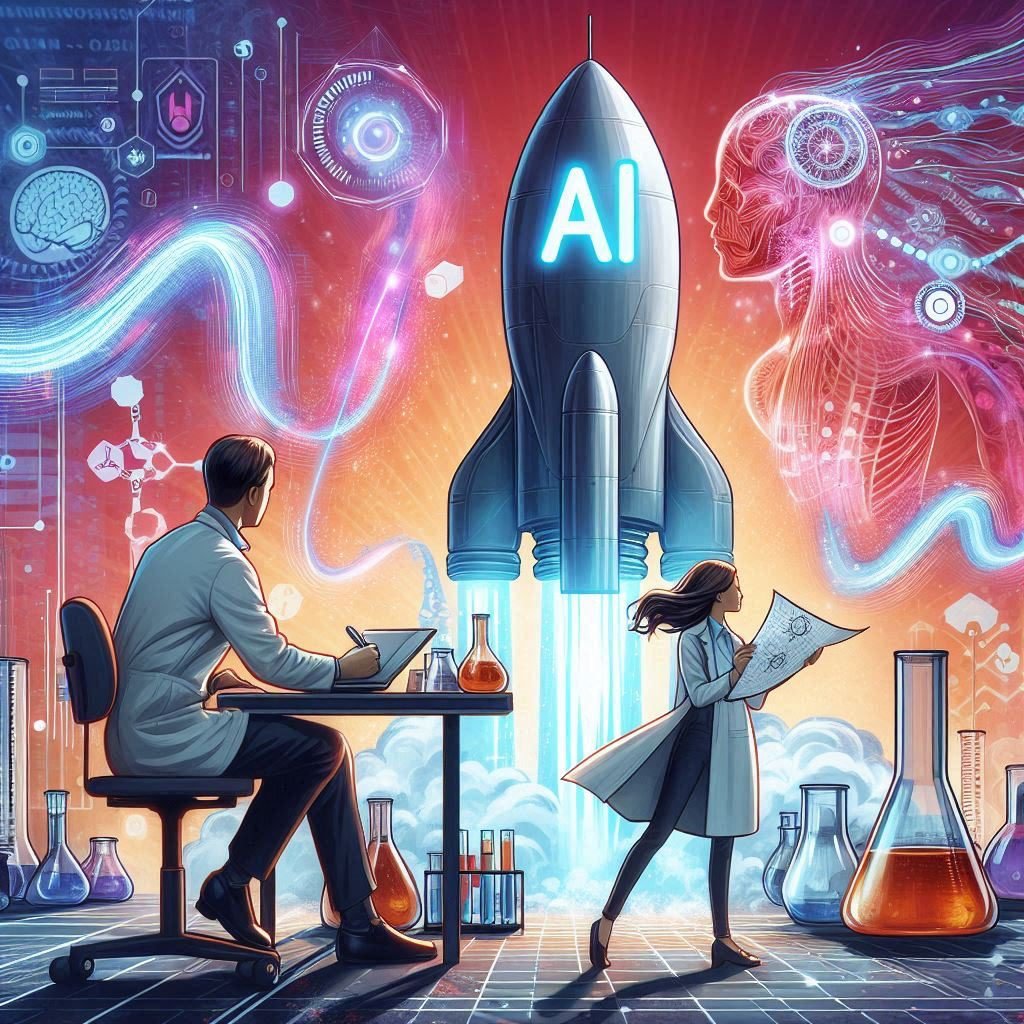
How AI Is Rapidly Transforming Biology (After Years Behind the Scenes)
We used to think CRISPR was the peak of innovation. But now? AI has entered the lab—and it’s not just helping out. It’s flipping the whole workflow. From decoding genomes to designing experiments, from predicting protein structures to reviewing papers, AI is becoming the smartest lab partner we never knew we needed, but secretly wanted!
Now, here’s the thing: Artificial Intelligence in biology isn’t entirely new. For years, it’s been quietly powering niche applications—used by a handful of specialists for tasks like protein folding or genomic alignment. But what’s happening now is different. AI is breaking out of the bioinformatics basement and showing up in everyday lab work. It’s faster, more powerful, and—thanks to intuitive tools—finally usable by the rest of us.
We’re no longer watching Artificial Intelligence from the sidelines. We’re using it to write protocols, analyze data, and yes, even brainstorm that grant proposal we’ve been putting off. What used to be “just for the experts” is now becoming essential for biologists at every level.
Curious what that looks like day to day? Here’s how AI is already rolling up its virtual sleeves alongside us in the lab.
How AI Is Changing What It Means to Be a Biologist
Let’s be honest—biologists used to spend most of their time with pipettes, Petri dishes, and more than occasional existential crisis about Western blots (I don’t miss you leaky, evil glasses!). But today, the role is evolving. AI isn’t another fancy lab gadget—it’s becoming a core part of the biological research.
We’re moving from hands-on to hybrid: combining traditional experiments with AI-driven predictions, automated analysis, and decision-support tools. Whether it’s helping prioritize genes for CRISPR editing or segmenting microscopy images while you sip coffee, AI is reshaping how we work.
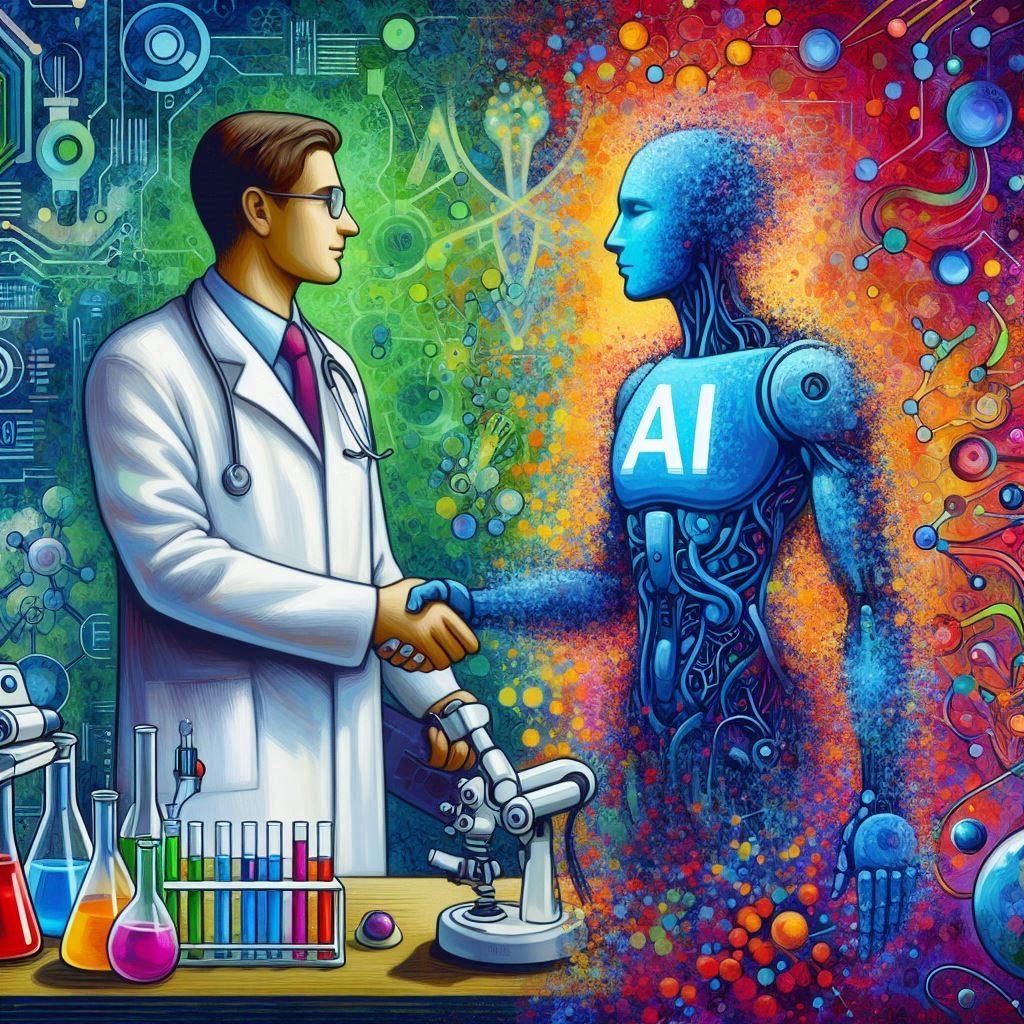
As someone who supports labs across Europe (I am a Field Application Specialist), I’ve seen this shift up close. AI tools are no longer reserved for tech-savvy postdocs in computational biology. They’re showing up in academic labs, biotech startups, and pharma giants alike. The common thread? Biologists who learn to collaborate with AI—not compete with it—are already ahead of the curve.
Real-Life Examples: How AI Is Already Powering Biology Workflows
So, what does working with AI actually look like in the lab? Is it just fancy code running in the background while we do the real work? Not quite.
Artificial Intelligence is quietly becoming the behind-the-scenes MVP of modern biological sciences — solving problems faster, spotting patterns we’d miss, and saving time we didn’t know we had. Here’s how it’s already reshaping daily tasks across research and industry:
- 📊 Data Analysis on Steroids: Whether it’s genomics, transcriptomics, proteomics, or your last 500 qPCR runs, AI can crunch and clean massive datasets in seconds—freeing you from spreadsheet purgatory.
- 🔍 Pattern Recognition Extraordinaire: Machine learning models are brilliant at spotting subtle trends in data—kind of like your lab mate who notices every weird blot on your gel, but without the passive-aggressive commentary.
- 🧪 Protein Structure Prediction: Remember when crystallizing a protein took weeks and a small emotional breakdown? With tools like AlphaFold, accurate models are now generated in hours, sometimes minutes.
- 🔬 Supercharged Microscopy & Imaging: From automated cell counting to fluorescence quantification, AI-powered image analysis tools are turning messy microscopy into sharp, quantifiable insights.
These aren’t just “nice to have” tools anymore—they’re becoming expected in competitive research environments. And the best part? Many of them are now accessible without needing to code or beg your favorite bioinformatician for help.
Easy-to-Use AI Tools Every Biologist Should Try
If you’re thinking, “Sounds cool, Giuseppe—but I’m not exactly an AI expert,” you’re in good company. The good news? You don’t need to be a machine learning expert to start using AI in your work. In fact, many AI tools are now so intuitive that even the most tech-averse labmate could start using them before lunch (with minimal complaining).
Here are a few tools I use regularly as a Field Application Specialist—ones that have helped me save time, work smarter, and occasionally impress colleagues with suspiciously fast results:
- 🔍 Literature Review Tools: Platforms like Consensus, Sourcely, Scite, and Perplexity help you sift through mountains of papers and find relevant insights in seconds. Think of them as your personal AI-powered research assistants (without the coffee addiction).
- 🧠 Smart Paper Analysis: NotebookLM is great for extracting key insights from scientific papers and summarizing dense material—perfect for prepping before customer meetings or journal clubs.
- 📊 Visual + Conceptual Aids: I use the famous large language models (LLMs) like ChatGPT, Claude, and Gemini to build mind maps, dashboards, graphs, and other visuals that help me simplify and communicate complex data
- 🎨 Presentation Magic: Tools like Gamma, Napkin, and Canva AI make it easy to design clear, visually appealing slides or entire presentations—without spending hours fiddling with fonts and slide layouts like it’s 2005.

These generative AI tools aren’t about replacing your expertise—they’re about amplifying it. They help you focus on higher-level thinking while offloading repetitive, time-consuming tasks. If you haven’t tried using Artificial Intelligence yet, this is your invitation to start small, experiment, and see what sticks.

So next time you’re drowning in data or buried in papers, remember: There’s probably an AI tool that can help!
Will AI Take My Job? Let’s Talk About the Future of Biologist Careers
Of course, every time we talk about AI doing our tasks faster, there’s that nagging question: “Wait… does that mean AI will eventually do all of my job?” Let’s tackle that head-on.
Here some scary stats: Goldman Sachs estimates AI could automate or replace up to 300 million jobs worldwide (that’s about 9% of the global workforce!) (explodingtopics.com). McKinsey goes even further, predicting that by 2030, around 375 million people might need to switch careers altogether (explodingtopics.com).

Scary? Sure — if you take it at face value. But here’s the thing: these numbers lump every industry together, from truck drivers to call centers. Biology is a different beast. It’s complex, unpredictable, and deeply hands-on — and that’s exactly why AI isn’t here to steal your lab coat.
Instead, AI is reshaping what we do, how we do it, and the skills that matter most. In other words: it’s not gunning for your job, if you evolve with it. It is rewriting your job description instead.
In my own work supporting researchers across Europe, I’ve seen firsthand how roles are shifting. Wet lab scientists are using AI to analyze their results faster. Teams are hiring people with hybrid skills—biologists who can speak both pipette and Python (even if it’s just the basics). New positions are opening up in areas like:
- 🧬 AI-Assisted Research Design
- 🧪 Biological Data Curation and Annotation
- 🤖 Lab Automation and Robotics Integration
- 📊 Bioinformatics and Machine Learning Collaboration
- 🧭 AI Ethics and Governance in Life Sciences
The biologists who are thriving aren’t necessarily coding wizards. They’re curious, adaptable, and willing to experiment with new tools. In many ways, your biological intuition is still the most valuable asset—you’re just adding a digital superpower on top.
So no, AI isn’t coming for your job. But it is changing the job description—and the earlier you start adapting, the better positioned you’ll be.
Why Human Biologists Are Still Irreplaceable (For Now)
So if AI can analyze data, generate hypotheses, and even suggest experiments… what do we bring to the table?
In short: a lot.
Because while AI can crunch numbers and process data at lightning speed, it still lacks intuition, ethical judgment, and the joy of scientific discovery (not to mention the ability to locate mislabeled Eppendorf tubes). Here’s where human biologists continue to lead:
🧩 Experimental Design & Interpretation
AI can crunch data, suggest experiments, and even generate hypotheses. (Yes, Google’s AI Co-Scientist is already doing that—if you’re curious, I wrote a post about it: Google’s AI Co-Scientist: A Revolutionary Breakthrough or Just More Hype?)
But! AI still needs human supervision. We need to interpret and validate what AI generates. Deciding which experiments matter, how to troubleshoot them, or how to interpret strange results? That still takes a trained, curious human brain.
🧹 Data Curation & Quality Control
Let’s face it: data is messy and AI is only as good as the data it’s fed. Someone’s got to clean it, validate it, and make sure the training sets for AI aren’t feeding it garbage. AI is only as smart as the data we give it—and sometimes that data needs a good scrub.
📣 Science Communication
Can AI explain things clearly? Definetly better than us on a Monday morning. But inspiring your team, explaining a discovery at a conference, or making people care about the science? That still takes a human voice—and a good story. When it comes to inspiring, connecting, and making people care, humans still prefer humans.
⚖️ Ethical Decision-Making
Just because AI can doesn’t mean it should. As biology pushes into new territory, it’s up to us to ask the big questions: Should we edit this gene? Release that microbe? Clone this dinosaur? (Yes, we’ve all secretly dreamed of Jurassic Park—but maybe let’s not.) Questions of consent, fairness, and societal impact still need a moral compass—and that compass isn’t artificial.
🧪 Hands-on Lab Work
Until we have robots that can pipette without contaminating half the bench (and label every tube correctly), we’ve still got a solid niche in the physical world.

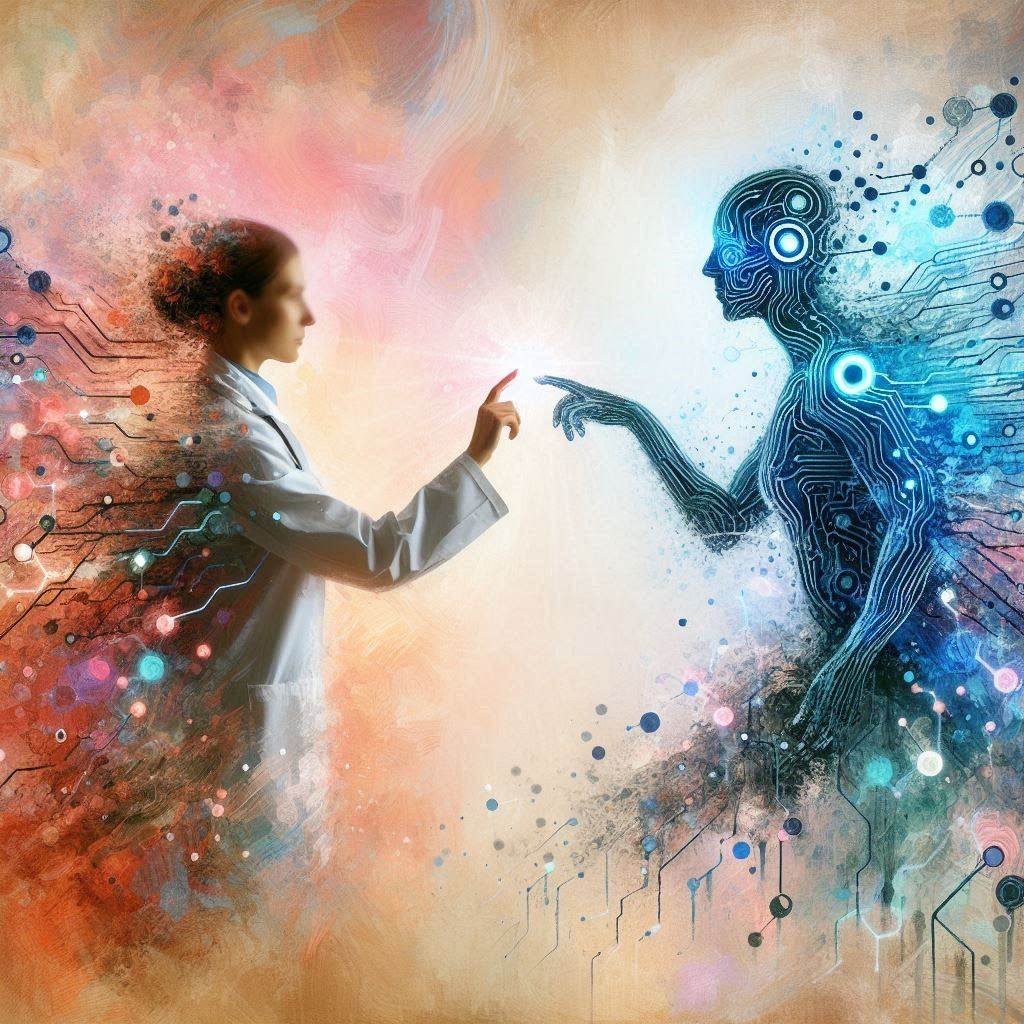
In other words: AI can assist, but it can’t replace the human elements of science. That means the best future belongs to biologists who embrace AI as a collaborator—not a competitor.
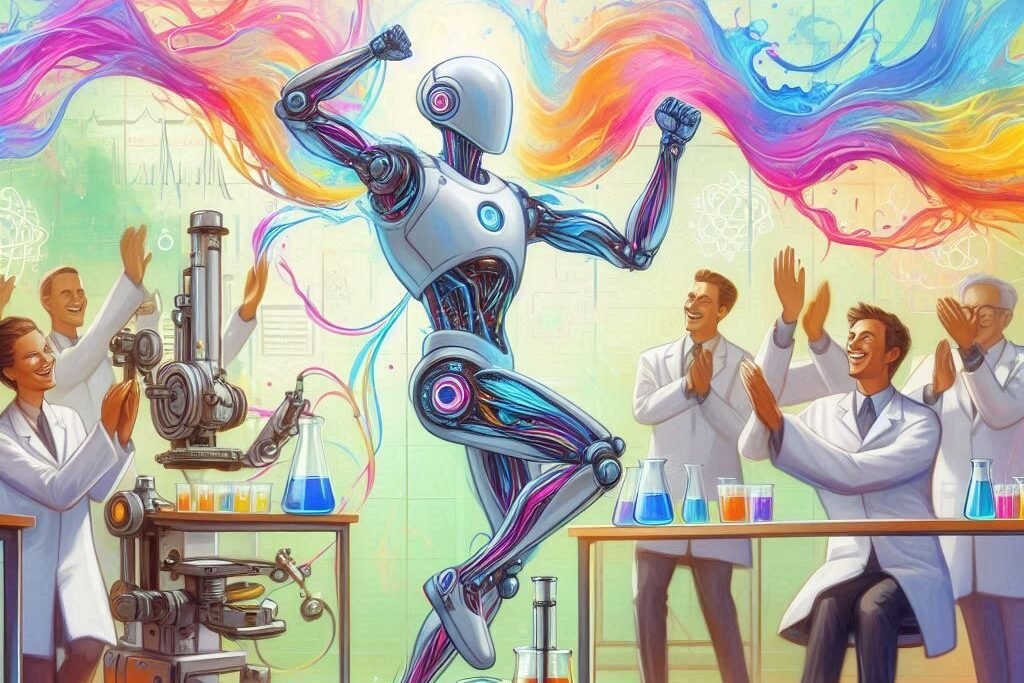
Plus, AI hasn’t yet figured out how to celebrate with a victory dance when the experiment finally works after months of troubleshooting. That joy? 100% human.
How to Adapt: A Biologist’s Guide to Thriving with AI
Okay, so AI isn’t replacing us—but it is evolving the way we do science. So how do you keep up without burning out or buying a stack of deep learning textbooks you’ll never read?
Here’s a roadmap for getting started—step by step, no panic required:
- 📘 Learn the Basics (No Coding Degree Required): You don’t need to become an AI engineer. Start by understanding the fundamentals—what AI is, how machine learning works, and where it fits into biology. Platforms like Coursera, edX, and YouTube have free, beginner-friendly courses tailored for scientists.
- 🧪 Use AI in Your Own Work: Start small. Try an AI-based tool for literature reviews, image analysis, or protocol optimization. The goal isn’t to master everything—it’s to integrate AI where it actually saves you time or adds insight.
- 🤝 Collaborate with AI-Savvy Colleagues: You don’t have to go solo. If your lab or company has a bioinformatician or data scientist, start a conversation. These partnerships are where the magic happens—your biological intuition + their technical know-how = real innovation.
- 📬 Stay Informed: AI evolves faster than fruit flies on a sugar binge. Subscribe to newsletters, follow AI-biology folks on LinkedIn or X (Twitter), or read up on new tools being integrated into wet lab routines. A little awareness today can future-proof your skillset tomorrow. Want to keep up with the latest in AI and biology? CuriosityBloom newsletter can help you do just that! Subscribe form below 👇
- 🧭 Think Ethically: As AI expands its influence in healthcare, genetics, and biotech, it raises serious ethical questions. As biologists, we can’t ignore these. Stay curious—and stay vocal. We need scientists at the table when these decisions are made.

So, what exactly should you focus on as you level up? Here’s a breakdown of the must-have skills every modern biologist needs to thrive alongside AI.
The Must-Have Skills for Biologists in the AI Era
If biology is evolving, so should we. AI isn’t just reshaping the way we analyze genomes or interpret complex biological data—it’s redefining the skills needed to thrive in our field. So, you do need to adapt.
Think of it like upgrading your lab techniques: you wouldn’t still be using paper lab notebooks or manual pipette counters, right? (Well, hopefully.) The same goes for integrating AI into your scientific toolkit.
Here’s how you can actively develop the skills that will future-proof your career in the age of AI:
📈 1. Data Fluency (Yes, Even a Little Goes a Long Way)
You don’t need to be a coding wizard—but knowing how to handle, interpret, and question biological data is now essential. Start by getting familiar with the basics: what good data looks like, how to spot outliers, and how to interpret AI-generated outputs without taking them as gospel.
🤖 2. Practical AI Awareness
What is machine learning, really? How do models get trained? Where can bias creep in?
Understanding these fundamentals helps you use AI tools wisely—and avoid treating them like magical black boxes. A few hours of online learning can seriously boost your confidence here.
🧪 3. 🔍 Critical Thinking & Scientific Judgment
Keep your critical thinking sharp- Recognizing flawed experiments, spotting biases in AI-generated insights, and asking the right scientific questions requires your expertise. If AI suggests an experiment that doesn’t make biological sense, guess who’s responsible for calling it out?
🧹 4. Data Curation & Preparation
Garbage data = garbage results. Learn how to organize, clean, and validate the biological data that feeds AI tools. The better your data, the better your discoveries.
🤝 5. Cross-Disciplinary Communication
Biologists who can talk to data scientists (and vice versa) are becoming essential. Learn to speak their language just enough to collaborate effectively—and maybe even teach them a thing or two about cells.
🧭 6. Ethical Intelligence
As AI tackles sensitive biological topics—genetic editing, patient data, reproductive tech—we need scientists who can think critically about what should be done, not just what can be done.
📚 7. Lifelong Learning Mindset
AI is evolving fast—and so should your skillset. Whether it’s trying a new tool, taking a short course, or just staying curious, a growth mindset will keep you relevant long after your latest PCR run.

So, what’s the takeaway? AI won’t replace biologists. But biologists who embrace AI, refine their skills will outpace those who don’t. The future of biology is hybrid—where human expertise and AI-powered efficiency work hand in hand.
Now that you know which skills to build, here’s the exciting part: these don’t just make you better at your current job — they open doors to brand-new roles emerging at the intersection of biology and AI. Let’s peek into that future.
What’s Next: The Future of Biology in the Age of AI
If AI is already reshaping our daily work, just imagine what the next few years could bring. We’re not just talking about faster results—we’re talking about a redefinition of how we do biology altogether.
Need proof? The AI-in-bioinformatics market alone is projected to skyrocket from $4.3 billion in 2024 to over $18 billion by 2028 — that’s a mind-blowing 43.8% annual growth rate (thebusinessresearchcompany.com). In plain English: massive change is coming, and where there’s change, fresh opportunities follow.

A Nature article recently highlighted how essential AI literacy is becoming for biologists—not just to keep up, but to lead. With governance and ethics moving front and center, we can expect new hybrid roles to emerge, blending benchwork with big-picture thinking. (nature.com).
Curious what those might look like? Here’s a sneak peek at tomorrow’s job board — and yes, you can start training for these now:
- Synthetic Data Biologist: Specializes in generating and validating AI-friendly biological datasets for training predictive models.
- Digital Architect (Cellular Systems): Builds virtual replicas of cells, tissues — maybe whole organisms — so we can run experiments in silico. It’s “The Sims: Biological Systems Edition,” but with real-life impact.
- AI-Augmented Lab Strategist: Bridges wet-lab workflows with machine learning pipelines. Translation: someone who knows how to get your robot to actually do what you want.
- Precision Medicine Specialist: Uses AI to fine-tune treatments for each patient’s unique genes, environment, and lifestyle. Personalized medicine, turbocharged.
- Ethical AI Consultant: Evaluates the societal, ecological, and ethical impact of biologically-informed AI tools. When AI suggests editing a gene, this is the person asking, “But should we?”
- Independent AI Researcher: Develops and runs autonomous AI agents to handle tasks like gene sequencing, lab automation, or entire experiment pipelines — freeing up humans for bigger questions (and coffee breaks).
- Drug Discovery AI Specialist: Accelerates drug design and testing with predictive algorithms. Shorter timelines, fewer dead-ends, more breakthrough treatments.
- AI/ML Model Trainer: Fine-tunes algorithms to ensure they work for biology, not against it — because a confused model is worse than a confused postdoc.
- AI Product Manager: The bridge between data geeks, lab scientists, and the people who actually use the AI tools. Keeps everything on track and user-friendly.
(Oh, and if you love organizing people and experiments as much as data, you might love project management too. Here’s a deep dive on what it’s like: Thriving as a Biology Project Manager.)
This isn’t science fiction—it’s the logical next step. We’re already seeing hybrid roles gaining traction in research institutions and biotech startups alike. Soon, these won’t be niche titles—they’ll be the new normal.
The Future is Bright (and Definitely Worth Preparing For)
The numbers don’t lie: AI is reshaping biology faster than we anticipated. But after years of supporting researchers across Europe and watching this transformation firsthand, I’m convinced we’re not facing a crisis—we’re facing a huge opportunity.
The biologists thriving today aren’t the ones avoiding AI—they’re the ones experimenting with it. They’re using it to accelerate their research, amplify their insights, and tackle problems that would have taken months just a few years ago. Most importantly, they’re staying curious about what’s possible.

Your biological intuition, experimental design skills, and scientific judgment aren’t becoming obsolete—they’re becoming more valuable than ever. AI needs guides who understand the nuances of living systems, who can spot when a prediction doesn’t make biological sense, and who can ask the right questions about what we should discover next.
The choice is simple: you can wait and watch from the sidelines — or you can jump in and start experimenting now. Pick one AI tool from this post, try it for a week, and notice how it changes your workflow. Build the skills or explore the How to adapt path we discussed. Start leveraging AI today — one small step at a time. Who knows? That tiny experiment might just spark your next big career transformation.
Personally, I make time to explore new platforms, test them in my workflow, and stay in the loop. AI isn’t going away—and I’d rather ride the wave than watch it crash from the shore.
The future of biology isn’t just about better tools—it’s about better biologists who know how to use them. And that future starts with your next experiment.
🧠 Let’s Keep the Conversation Going
What are your thoughts on AI in biology? How are you preparing for this AI-driven future?
- 💬 Drop a comment below—What do you think about AI in biology? Is it a breakthrough, a buzzword, or both? How are you preparing for this new era of research?
- 🔄 Share this post (Share bottons below 👇) with your colleagues, lab mates, or that friend who always brings up ChatGPT during journal club. Let’s spark a broader discussion on where science is headed.
- 📩 Subscribe to the Curiosity Bloom newsletter for deep dives into biology, tech, and the future of research—straight to your inbox, no fluff, just valuable insights!
- 🚀 Stay tuned for more posts on Curiosity Bloom, where we explore interesting scientific topics, career opportunities, and the evolving role of AI in science.
Until next time, keep curious and stay adaptable!
FAQ: Your Burning AI-in-Biology Questions, Answered
Do I need to learn coding to work with AI in biology?
Not necessarily—but it might helps. While roles like data scientists and AI modelers do require coding (typically in Python or R), many tools are becoming increasingly user-friendly. Biologists can now use AI-powered platforms through intuitive interfaces, especially for tasks like image analysis, sequence alignment, or predictive modeling. That said, having a basic understanding of how these tools work under the hood will give you an edge—and help you avoid treating AI like a mysterious black box.
Are universities keeping up with the AI trend in biology education?
Some are sprinting ahead, others are still stuck at the starting line. A few forward-thinking programs now offer integrated courses in bioinformatics, machine learning, or AI ethics. However, many traditional biology curricula haven’t yet caught up. If your school isn’t teaching it, take the initiative—online courses (e.g., Coursera, edX, or fast.ai) can fill the gap.
What ethical concerns should biologists be aware of when using AI?
Plenty. AI can unintentionally perpetuate biases in training data, misclassify rare diseases, or even suggest harmful actions if not properly validated. Biologists must work alongside ethicists and data scientists to ensure that algorithms are transparent, validated, and used responsibly—especially in healthcare and environmental applications. Consent, data privacy, and the environmental cost of large AI models are also increasingly important.
Will AI impact funding and grant writing for biologists?
Yes—and it already is. Grant agencies are beginning to look for proposals that integrate artificial intelligence approaches or collaborate with data scientists. AI tools can also help write grant applications, analyze literature, and find funding opportunities. But beware: funding bodies will also expect applicants to understand AI’s limitations and justify its use clearly.
Is AI going to change how scientific papers are written and reviewed?
It’s already happening. Tools like ChatGPT can help draft abstracts, summarize papers, or translate complex concepts. On the peer review side, journals are experimenting with AI to flag plagiarism, detect image manipulation, or assess methodological soundness. The future might involve co-writing with AI—or at least running your paper through one before submission.